
Freshness you can't replicate - British early potatoes lifted today are on supermarket shelves tomorrow - washed, packed and distributed within 24 hours of leaving the ground
A story of resilience - from the last commercial early potato grower on Ayrshire’s Ardrossan coast to a fourth-generation Pembrokeshire family farm to a collaborative network of five Suffolk growers, British early potato production is built on generations of knowledge and passion
A growing opportunity - GB Potatoes is working to grow the UK potato industry, and the early potato season represents a powerful opportunity to reconnect consumers with a seasonal, nutritious, versatile British staple that needs nothing more than butter to shine
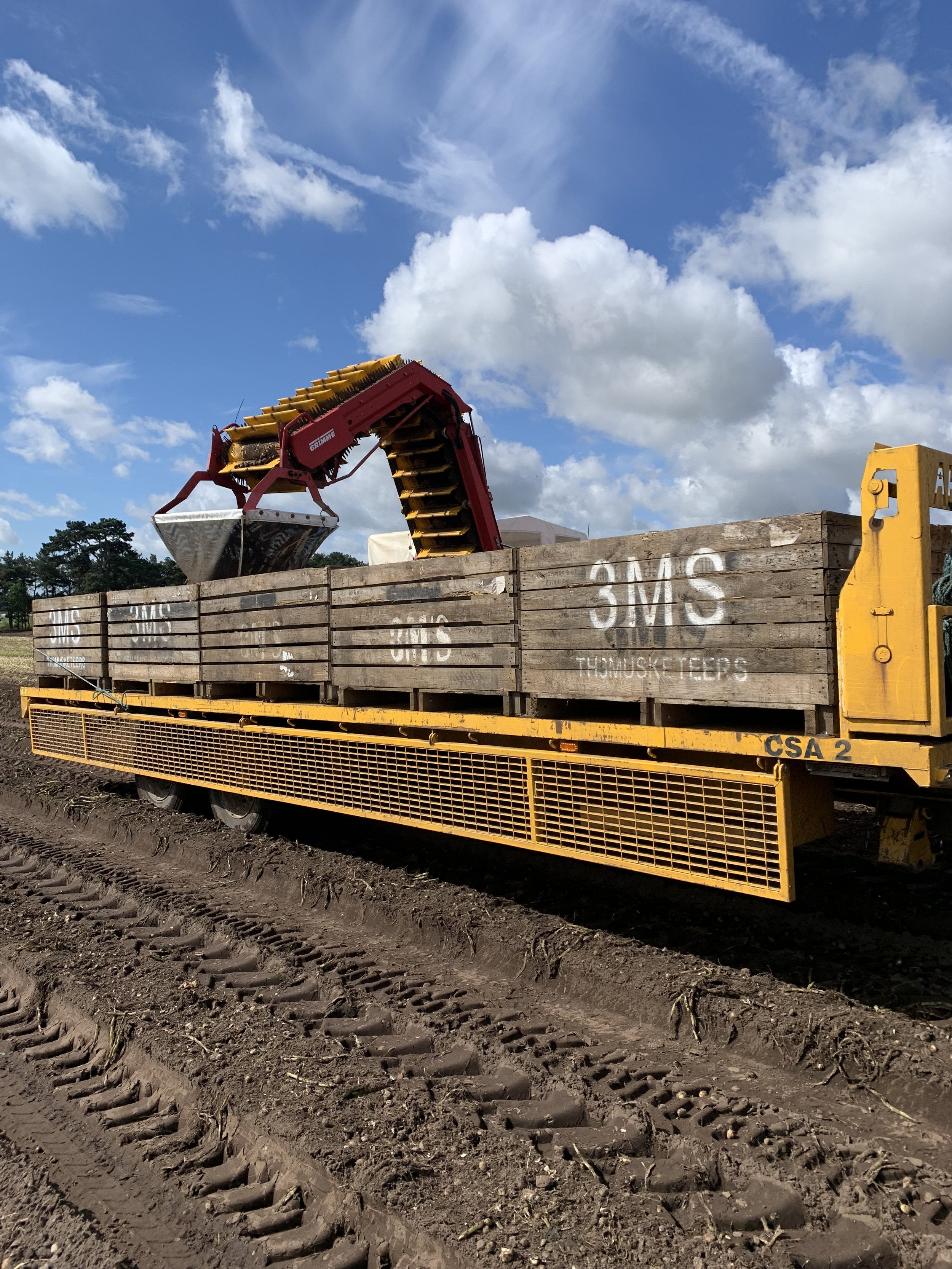
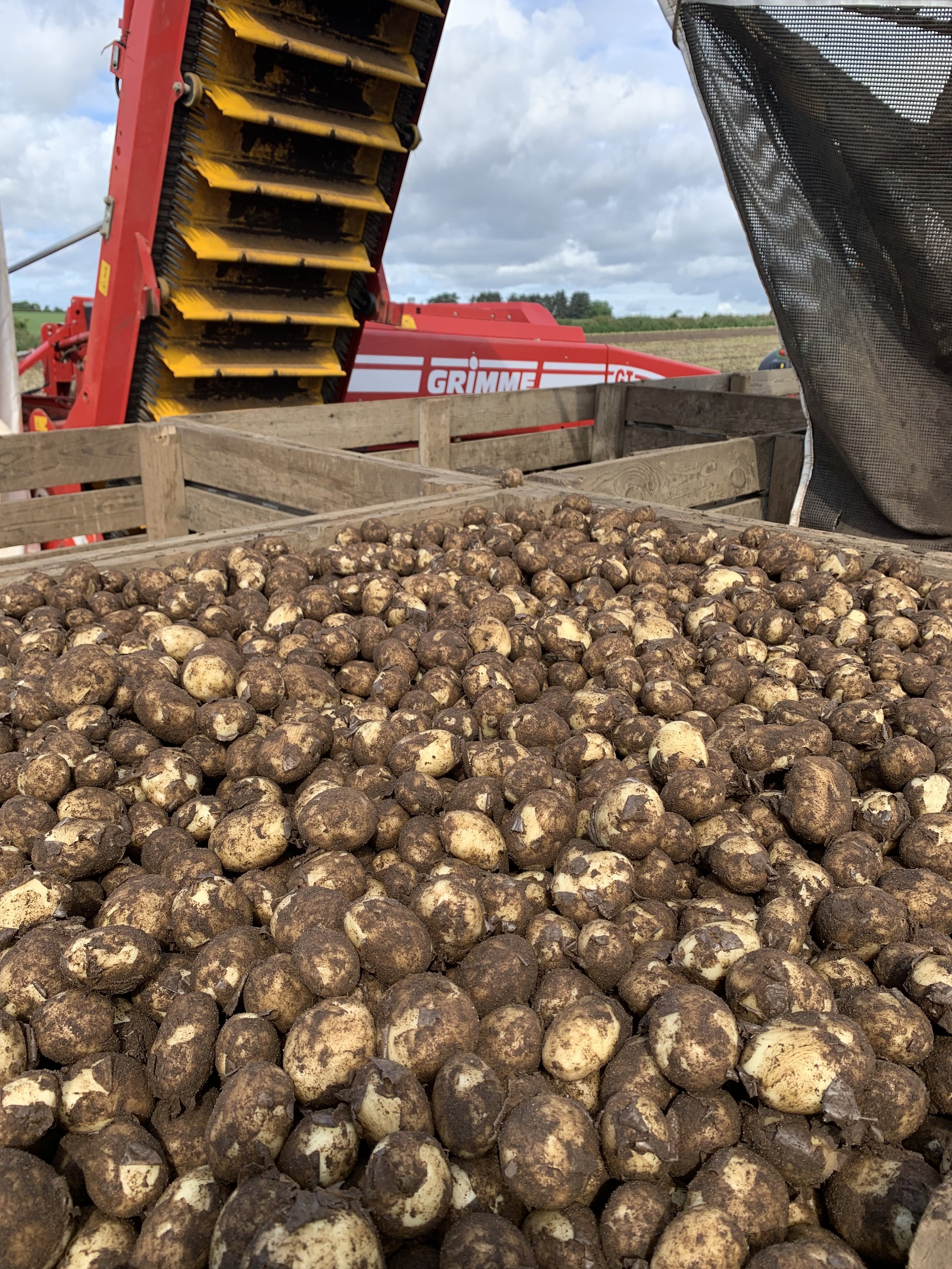
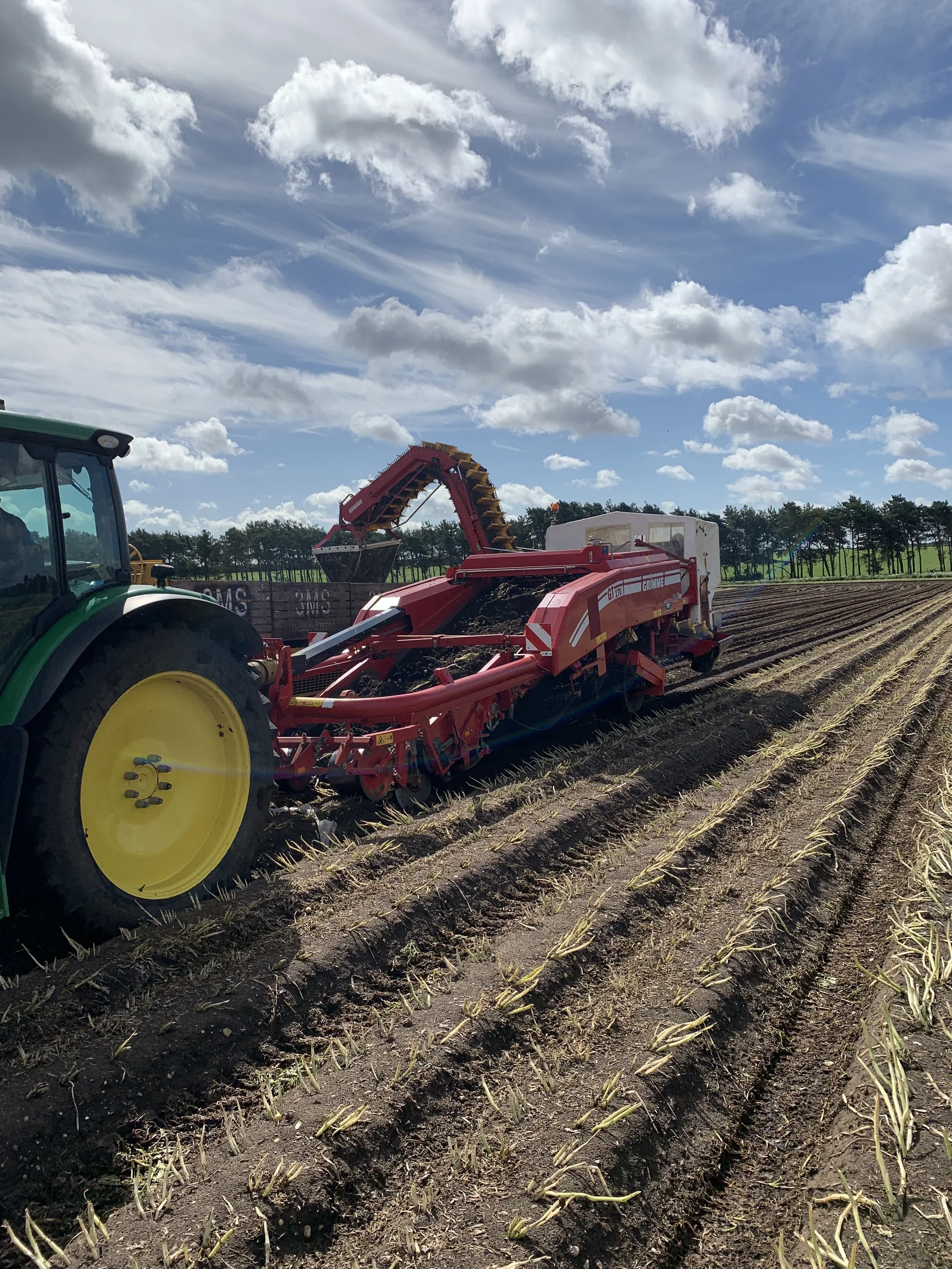
The British new potato needs no introduction, no complicated recipe, and no embellishment - just butter to enjoy this brief, brilliant early summer harvest.
Right now, in three iconic British ‘early potato’ sweet spots, potato lifting is underway. In the coastal fields of Ayrshire, the farmlands of Pembrokeshire, and the Sandlings of Suffolk - farmers who benefit from a warm climate and kind soils have begun their season. Within hours their crops are washed, packed and heading to supermarket shelves.
In Suffolk, Jim Wayman - of the Three Musketeers’ grower group – has been working toward this moment since March. Operating across approximately 1,600 hectares of the Sandlings - a narrow strip of light sandy coastal soil that runs eight miles inland from the Suffolk coast - the group of five growers plants its earliest crops under fleece before lifting from the 1st of June onwards. From field to shelf in under 24 hours, their potatoes are lifted in the morning, washed, hydrocooled and packed on the same day, and in distribution centres before nightfall.
"There is nothing better than grabbing a handful of new potatoes off a harvester of an afternoon, taking them home and having them in the evening," says Jim. "That is as good as it gets."
The Sandlings' unique sandy, acidic soil warms rapidly in sunshine, creating a natural microclimate that makes it one of the earliest production areas in England. The group of farms works collaboratively - sharing machinery, pooling expertise and building resilience into their supply chain in a way that no single farm could achieve alone. They produce around 65,000 tonnes annually, making up a significant proportion of the UK's packed potato market through June, July and August.
On the Pembrokeshire coast, William Richards of Windmill Park farm represents the fourth generation of his family to work this land. Growing 30 hectares of salad potatoes within the Pembrokeshire Coast National Park, his crop carries the weight of both history and protected status - Pembrokeshire Earlies hold a PGI designation, one of only four Welsh products to do so.
Harvested from early June and packed the same day at Puffin Produce's state-of-the-art packhouse in Haverfordwest - just eight miles away - the potatoes are on Welsh supermarket shelves within 24 hours. For William, the Welsh provenance story is not a marketing spin. It is simply the reality of growing food for the people closest to where it is grown.
"It's Welsh produce for Welsh consumers," he says. What’s lovely, he adds is that the furthest Welsh consumer is barely a hundred miles away.
The farm operates a five-year rotation of grass, spring barley and potatoes alongside beef and sheep enterprises - sustainability is not seen by William as a scheme to comply with, but rather as the foundation of how the land has always been farmed here.
On the Ayrshire coast near West Kilbride, history is also a big part of the Wilson’s potato enterprise. The family has been growing early potatoes since the early 1900s - and they are now the last commercial early potato grower left in a small area that once had over 1,200 hectares of ‘earlies’ in production. Where horse and cart once queued at the local station to load trainloads of new potatoes bound for Glasgow, and squads of workers crossed from the Isle of Arran to help with the harvest – with 100 pickers lifting 60 tonnes a day - today the operation is run by two members of staff, a harvester, and an undiminished passion for the crop.
"That's the main reason I do it," grower Sandy Wilson says of the first lift of the season. "Seeing them come out of the ground early June – even seventy years on, that sight never gets old."
The farm's approach to growing is rooted in generations of accumulated knowledge. Sand-based coastal soil along this stretch of the Ayrshire coast demands careful stewardship - farmyard manure and organic matter built up from the Wilson’s own beef herd, worked into the land year after year to hold fertility and moisture in ground that would otherwise give little back.
Sandy is clear on what makes an Ayrshire early worth waiting for. Forcing crops too early, he argues, produces something that tastes not yet ready - "like a green tomato." The real thing, lifted when the season dictates rather than when the calendar demands, has a flavour that needs nothing added to it.
"There is a unique taste to them," he says. "There's no doubt about that."
Behind the simplicity of a new potato lies a production story of significant complexity and risk. Rising fuel costs, tightening labour availability, and increasing pressure on seed supply are challenges shared across all three regions. For William Richards, one issue stands above the rest.
"The risk is carried solely by the grower," he says. "You can lose five to ten percent of your crop in a bad year for various reasons, and it never reflects back in the price."
In Suffolk, water is a major challenge. The farmers of the Sandlings have spent decades engineering their land for purpose - reservoirs, underground mains and precision irrigation systems that make one of England's driest counties one of its most productive.
All three growers are clear about the import competition that fills gaps when British crops are delayed by a cold spring. But they are equally clear about the quality case for home-grown.
"We've been doing this for 25 years," says Jim. "There are only two years in that time where we haven't been going in the first week of June. We're pretty robust and reliable. We want consumers to be buying from here."
GB Potatoes sees early potato production as central to that ambition - not just in volume, but in reconnecting consumers with the seasonal story behind what is one of Britain's most versatile and nutritious staple foods. From the last early potato grower on Ayrshire’s Ardrossan coast to a fourth-generation family farm in the Pembrokeshire National Park to a collaborative network of five Suffolk farms supplying every major supermarket - the early potato season is brief, brilliant, and unmistakably British.